2
January 2019
Signal Processing on Static and Dynamic 3D Meshes: Sparse Representations and Applications
IEEE Access
Abstract
Nowadays, real-time 3D scanning and reconstruction becomes a requirement for a variety of interactive applications in various fields, including heritage science, gaming, engineering, landscape topography, and medicine. From the
Key Contributions
- Comprehensive review of fundamental signal processing models (RPCA, CS, MC) for geometry processing.
- Analysis of scalable architectures and optimization algorithms for sparse representation tasks.
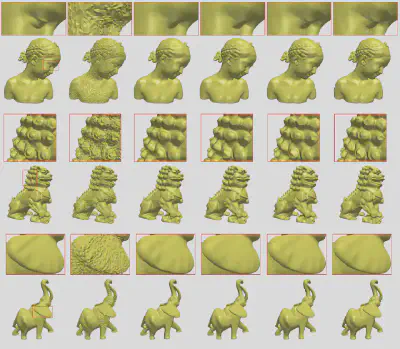
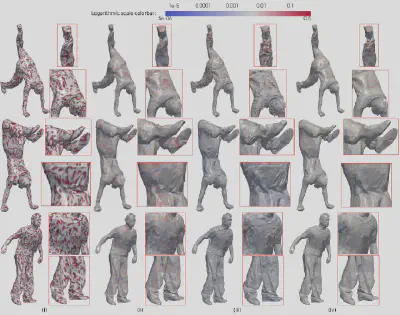
- Demonstration of sparse modeling impact on 3D processing tasks (noise removal, outlier rejection, data completion).